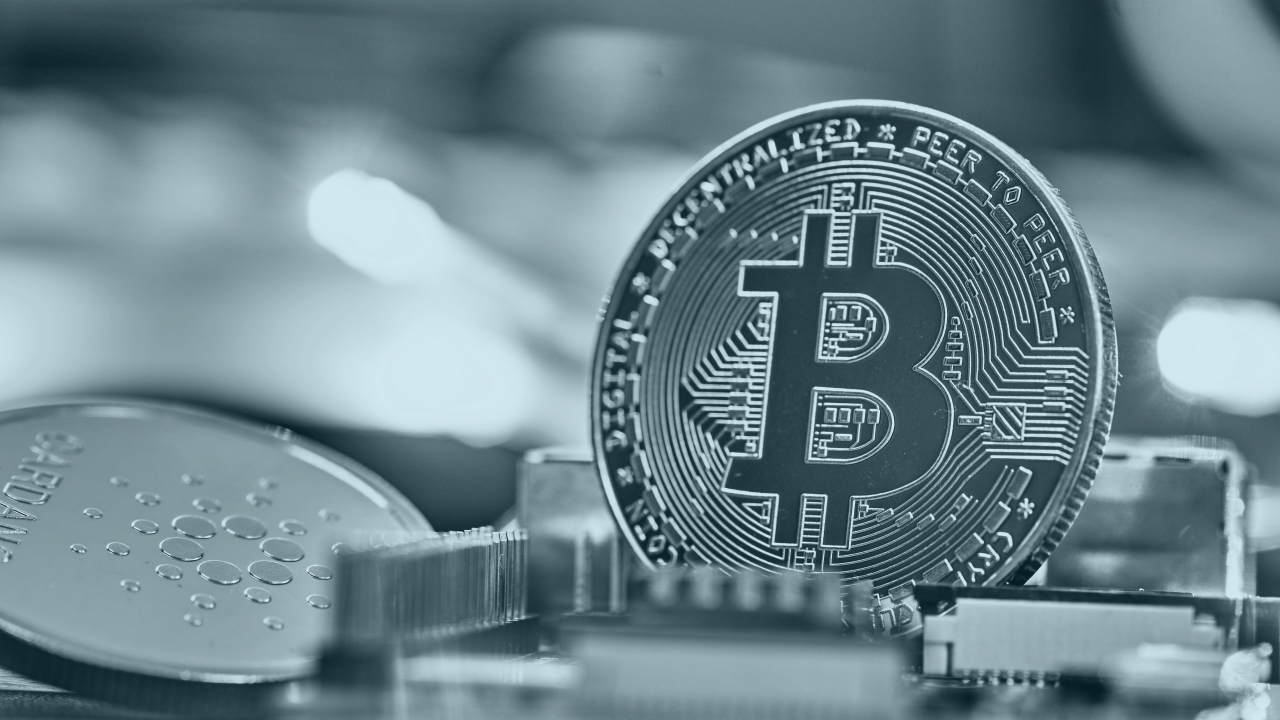
What is the Bitcoin halving?
Bitcoin miners are rewarded for verifying new blocks on the network, essentially securing the network. For this, they are paid in BTC, currently 6.25 BTC per block verified plus transaction fees. It takes about 10 minutes to verify a new block so there are roughly 144 blocks verified every day which equates to rewards of 900 BTC each day. Thus, the supply of BTC increases by this amount daily.
For every 210,000 blocks mined, the mining reward gets halved. So, instead of a miner receiving 6.25 BTC they will get 3.125 BTC for verifying a block. This will reduce the new BTC daily supply to about 450 BTC.
What is the current market status?
There are various sources that cite the value of daily BTC transactions. Taking exchange volume only, the recent range is from $20bn to $60bn (let’s be conservative and call this $30bn/day). At current rates (BTC = $70,000), the reduced new supply will equal $31.5m, or roughly 1% of the average daily exchange traded volume, down from a previous 2%.
Miners, however, may not sell all their new coins. Research from CoinShares (1) suggests that the cost of mining a Bitcoin after the halving will be around $40K depending on many variables. So, miners whose operational costs are less than the current market rate may choose to hold their coin and not bring it to market. However, this was always the case. You have some miners that sell all the rewarded BTC when they get it (either to take profit, cover operational costs or for capital investment) and others who hold excess Bitcoin in the expectation of price appreciation.
Another consideration is the ‘free float’ (coins actively trading) in BTC. Currently circa 93.5% or 19.635m of all BTC has been mined. Of that, about 75% (2) is considered to be in long-term hold (where BTC has been sitting in a wallet for longer than 155 days) depending on the variable used for time. This would leave a free float of 5m BTC with the supply increasing by 0.01% daily.
Also, to consider are the new BTC ETFs. The average daily inflow volume into the new ETFs (including grayscale outflows) is $202m (3). This is far more influential on prices than the reduction in supply of $29m
What this means for the price of Bitcoin?
Whilst it is obvious that a decrease in the supply should be net positive for the price of any commodity, this should also be true for Bitcoin. The question is, how much should it increase by and has the increase in price already been built into the current price. As we have seen with the ETF announcements, most pre-determined headlines become ‘buy the rumour, sell the fact’ events and we see a risk of that here too.
We don’t find value in looking back on previous halvings, as there are not enough data points to be statistically meaningful. Additionally, trying to extrapolate correlations to halvings in an instrument that has gone up from $0 to $70K in a short period of time is difficult.
A much larger influence on the price of Bitcoin will be the ETF flows as these have the potential to dramatically change depending on sentiment. These flows can easily outsize the reduction in supply from the halving.
In Summary:
We see the halving as having a much larger impact on miners than the price of Bitcoin. Miners will have to adjust their operations to accommodate the smaller rewards they will get, whether that is by capital expenditure on more efficient equipment, cutting operational costs, or indeed selling more of their mined Bitcoin.
One of the goals for participants in the digital asset space is to increase institutional adoption. A reduction of $29m daily new supply in a market that already transacts $30bio is relatively trivial. If the market cannot handle a reduction of $29m daily supply, then the market is not ready for institutions.
Look out for the ETF flows; they will dictate the price more so than a small decrease in the supply growth.
(1) https://blog.coinshares.com/coinshares-mining-report-the-halving-and-its-impact-on-
hash-rate-and-miners-cost-structures-8646835d88ac
(2) https://chainexposed.com/SthVsLthSupply.html
(3) https://farside.co.uk/?p=997
(4) https://messari.io/project/bitcoin/charts/market/chart/real-vol